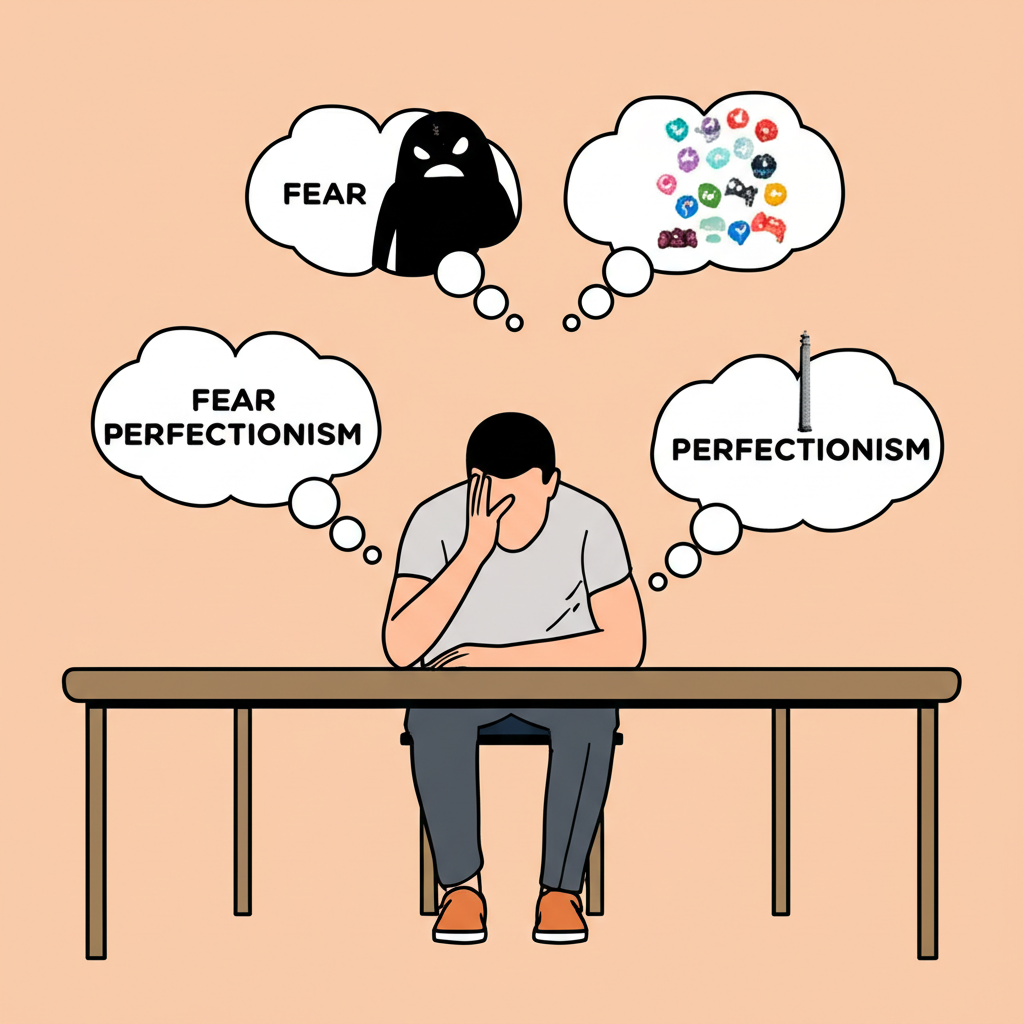
Procrastination is often misunderstood and oversimplified as mere laziness or poor time management. However, the psychology behind procrastination is much more complex. To effectively tackle procrastination, it is crucial to understand its root psychological causes. This section explores some of the most prevalent underlying factors: fear of failure, perfectionism, and lack of motivation.
### Fear of Failure
One prevalent reason why individuals procrastinate is the fear of failure. This deeply rooted fear stems from the desire to protect one's self-esteem. When faced with a challenging task, the fear of not performing well or meeting expectations can be overwhelming. This fear often leads individuals to delay action, preferring not to attempt a task at all rather than risk failing at it.
Fear of failure can manifest in various ways. For some, it may involve catastrophic thinking, where individuals imagine the worst possible outcomes if they fail. For others, it might present itself as an avoidance strategy—delaying tasks under the guise of waiting for the "right time" or "more information." The irony of this fear is that in attempting to protect their self-worth, individuals end up undermining their performance through inactivity and further self-doubt.
### Perfectionism
Perfectionism, while often seen as a desirable trait, can be a significant factor in procrastination. People who strive for perfection set unrealistically high standards for themselves, which can lead to intense pressure and stress. The desire for things to be perfect can paralyze individuals, causing them to avoid starting tasks until they feel circumstances are ideal or they are absolutely ready.
This form of procrastination is problematic because achieving perfection is typically unrealistic and waiting for perfect conditions may mean waiting indefinitely. The perfect plan, the perfect time, or the perfect execution rarely aligns with reality, causing tasks to remain unaddressed. Overcoming this requires a shift in mindset, where individuals learn to accept imperfections and take the plunge, understanding that done is better than perfect.
### Lack of Motivation
Another major contributor to procrastination is a lack of motivation. Motivation is the driving force that prompts individuals to act, and when it is absent, tasks quickly fall by the wayside. A lack of motivation can stem from various sources, such as a lack of interest in the task at hand, feeling overwhelmed, or not seeing the value or importance of the task.
Additionally, without clear goals or a tangible purpose, it becomes exceedingly difficult to muster the energy to begin or continue a task. This is why setting clear, attainable goals and connecting tasks to a greater purpose can be vital. By recognizing the significance and benefits of completing a task, individuals can create personal incentives that boost motivation and counter procrastination.
Understanding these psychological triggers is the first step in conquering procrastination. By identifying which of these factors—fear of failure, perfectionism, or lack of motivation—primarily affects you, you can begin to develop targeted strategies to overcome procrastination.
In conclusion, addressing procrastination requires more than just willpower. It involves in-depth self-awareness and a willingness to address ingrained psychological patterns. As you continue with this course, you'll learn practical strategies and techniques to combat these ingrained habits successfully and cultivate a more proactive and fulfilling approach to tackling tasks.